

STREAMING ROOM
Porto 2005 - Heilbronn 2023, room in room, fiberboard on wooden construction, 2 doors, 1 lamp, 1 table, 2 chairs, 2 computers, 3 monitors, 1 TV, various lightning, black carpet (inside: 255 x 300 x 300 cm, outside: 262 x 315 x 315 cm (HxWxD))
© Gregor Schneider / VG Bild-Kunst Bonn

KUNSTLANDSCHAFT
Tagebau Garzweiler 2022
© Gregor Schneider / VG Bild-Kunst Bonn

TERRA NOVA
Elsdorf 2022
© Gregor Schneider / VG Bild-Kunst Bonn

WOHNUNG A (Wohnzimmer)
Rheydt 2017, rooms within a room, blockboards and plywoods on a wooden construction, 16 doors, 6 windows, 10 lamps, 10 radiators, 2 showers, 2 toilets, 2 sinks, inventory, grey and white floor tiles, brown and grey carpet, white and beige walls and wallpapers, not visible live action, detached (outside: 272 x 1047 x 956 cm (HxWxD)), N. SCHMIDT, Pferdegasse 19, 48143 Münster, Skulptur Projekte Münster 2017, LWL-Museum für Kunst und Kultur, Münster, Germany 10.06.2017 - 01.10.2017
© Gregor Schneider / VG Bild-Kunst Bonn

WOHNUNG A (Badezimmer)
Rheydt 2017, rooms within a room, blockboards and plywoods on a wooden construction, 16 doors, 6 windows, 10 lamps, 10 radiators, 2 showers, 2 toilets, 2 sinks, inventory, grey and white floor tiles, brown and grey carpet, white and beige walls and wallpapers, not visible live action, detached (outside: 272 x 1047 x 956 cm (HxWxD)), N. SCHMIDT, Pferdegasse 19, 48143 Münster, Skulptur Projekte Münster 2017, LWL-Museum für Kunst und Kultur, Münster, Germany 10.06.2017 - 01.10.2017
© Gregor Schneider / VG Bild-Kunst Bonn

WOHNUNG A (Schlafzimmer)
Rheydt 2017, rooms within a room, blockboards and plywoods on a wooden construction, 16 doors, 6 windows, 10 lamps, 10 radiators, 2 showers, 2 toilets, 2 sinks, inventory, grey and white floor tiles, brown and grey carpet, white and beige walls and wallpapers, not visible live action, detached (outside: 272 x 1047 x 956 cm (HxWxD)), N. SCHMIDT, Pferdegasse 19, 48143 Münster, Skulptur Projekte Münster 2017, LWL-Museum für Kunst und Kultur, Münster, Germany 10.06.2017 - 01.10.2017
© Gregor Schneider / VG Bild-Kunst Bonn

INVISIBLE CITY
Athens 2017, hand painted water colour on mesh fabric hanging above the ground, mesh fabric, metal construction towers, metal ropes, water tanks and weights (4600qm, H max = 1000 cm), Omonia Square, Athens, Greece 08.05.2017 - 21.05.2017
Photo: Stavros Petropoulos / Alaska
© Onassis Cultural Centre/Fast Forward Festival, Gregor Schneider / VG Bild-Kunst Bonn

INVISIBLE CITY
Athens 2017, hand painted water colour on mesh fabric hanging above the ground, mesh fabric, metal construction towers, metal ropes, water tanks and weights (4600qm, H max = 1000 cm), Omonia Square, Athens, Greece 08.05.2017 - 21.05.2017
Photo: Stavros Petropoulos / Alaska
© Onassis Cultural Centre/Fast Forward Festival, Gregor Schneider / VG Bild-Kunst Bonn

INVISIBLE CITY
Athens 2017, hand painted water colour on mesh fabric hanging above the ground, mesh fabric, metal construction towers, metal ropes, water tanks and weights (4600qm, H max = 1000 cm), Omonia Square, Athens, Greece 08.05.2017 - 21.05.2017
© Onassis Cultural Centre/Fast Forward Festival, Gregor Schneider / VG Bild-Kunst Bonn

KLETTERGERÜST
Ciudad de México 2017, metal, paint (300 x 300 x 300 cm (LxWxH)), KINDERGARTEN, Museo Universitario Arte Contemporáneo, Ciudad de México, Mexico 11.02.2017 - 23.07.2017
© Gregor Schneider / VG Bild-Kunst Bonn

SUPPE AUSLÖFFELN
life action, Odenkirchener Str. 202, Rheydt, Germany 2014
© Gregor Schneider / VG Bild-Kunst Bonn

SCHLAFEN
life action, Odenkirchener Str. 202, Rheydt, Germany 2014
© Gregor Schneider / VG Bild-Kunst Bonn

ENTKERNTES GEBURTSHAUS 2014
Odenkirchener Str. 202, Rheydt, Germany 2014
© Gregor Schneider / VG Bild-Kunst Bonn

ENTKERNTES GEBURTSHAUS 2014
Odenkirchener Str. 202, Rheydt, Germany 2014
© Gregor Schneider / VG Bild-Kunst Bonn

ARCHIV 2014
Bochum 2014, room within a room, plasterboards on a construction made of steel, 3 lamps, 2 doors, 1 radiator, 1 security camera, diverse cupboards, 1 work table, 1 chair, 1 computer, gray linoleum, white ceiling panels, white walls, detached (inside: 450 x 515 x 240 cm, outside: 480 x 545 x 270 cm (L x W x H), S 10 cm), KUNSTMUSEUM, Kunstmuseum Bochum, Bochum, Germany 29.08.2014 - 12.10.2014
© Gregor Schneider / VG Bild-Kunst Bonn

BÜRO 2014
Bochum 2014, room within a room, plasterboards on a construction made of steel, 2 lamps, 2 doors, 1 radiator, 2 cupboards, 1 work table, 1 swivel chair, 1 computer, gray carpet, white ceiling panels, white wallpaper, detached (inside: 300 x 300 x 240 cm, outside: 330 x 330 x 270 cm (L x W x H), S 10 cm), KUNSTMUSEUM, Kunstmuseum Bochum, Bochum, Germany 29.08.2014 - 12.10.2014
© Gregor Schneider / VG Bild-Kunst Bonn

GERMAN ANGST
Yokohama 2014, masoned room within a room with concrete floor and mud tank, plasterboard on ceiling, 1 door, 2 lamps, 2 ventilation grids, 1 locker, mud, stone, cement, gypsum, paint, varnish, fat, silicone, sperm, coffee (1.122x587x224cm (LxWxH) S. 19cm), YOKOHAMA TRIENNALE 2014, Yokohama Museum of Art, Yokohama, Japan 01.08.2014 - 03.11.2014
© Gregor Schneider / VG Bild-Kunst Bonn

HAUPTSTRASSE 85a
Stommeln 2014, wall before wall, chipboards on a wooden construction, 1 door, 4 windows, 4 window sills, 1 garage door, 1 letter box, 1 lamp, 1 house number, 1 bell button, yellow and white stucco on the walls, anthracite-colored pedestal (925 x 730 x 695 cm (W x H x D) S. 14,5cm), Synagoge Stommeln, Pulheim, Germany 03.07.2014 - 18.03.2015
© Gregor Schneider / VG Bild-Kunst Bonn

BAD 2014
Köln 2014, room within a room, fiberboards on a wooden construction, 1 lamp, 2 doors, 1 shower cabin, 1 mirror, gray tiles on a ground, ceiling white, walls white and off-white, detached (inside: 314 x 250 x 212 cm, outside: 330,6 x 266,4 x 220 cm (L x W x H)), NEUERBURGSTRAße 21, Schauspiel Köln, Köln, Germany 19.06.2014 - 06.07.2014 & 23.08.2014 - 07.09.2014
© Gregor Schneider / VG Bild-Kunst Bonn

House of Neu-Garzweiler, built to replace house dying villages at the Garzweiler brown coal mining site, Neu-Garzweiler 2013
© Gregor Schneider / VG Bild-Kunst Bonn

STERBERAUM
Rheydt 2005 - 2007, room within a room, blockboards on a wooden construction, 2 doors, 2 window systems, 5 lamps, parquet floor, white walls and ceiling, detached (inside: 769,5 x 544 x 275 cm (L x W x H), S 11,6 - 43 cm), Kunstraum Innsbruck, Innsbruck, Austria 19.11.2011 - 28.01.2012
© Gregor Schneider / VG Bild-Kunst Bonn

DEAD END
Madrid 2011, plastic, metal, wood (10.000x160cm (LxD)), PUNTO MUERTO, Centro de Arte 2 de Mayo, Madrid, Spain 28.10.2011-26.02.2012
© Gregor Schneider / VG Bild-Kunst Bonn

DEAD END
Madrid 2011, plastic, metal, wood (10.000x160cm (LxD)), PUNTO MUERTO, Centro de Arte 2 de Mayo, Madrid, Spain 28.10.2011-26.02.2012
© Gregor Schneider / VG Bild-Kunst Bonn

KINDERZIMMER (No. 2)
Rheydt 2008, room within a room, chipboards on a construction made of wood, 1 door, 1 mirror, 1 lamp, beige PVC on a ground and at one wall, 3 walls white, pink ceiling (inside: 609x330x230cm, outside: 657x353x251cm (LxWxH)), PUNTO MUERTO, Centro de Arte 2 de Mayo, Madrid, Spain 28.10.2011-26.02.2012
© Gregor Schneider / VG Bild-Kunst Bonn

KOLKATA GODDESSES
Kolkata 2011, bamboo, straw, Hooghly River sludge, leftovers of fabric and paint, largest figure: 160 x 70 x 250 cm (L x W x H), Schneider's storage space, Rheydt, Germany 2012
© Gregor Schneider / VG Bild-Kunst Bonn

KOLKATA GODDESSES
Kolkata 2011, bamboo, straw, Hooghly River sludge, leftovers of fabric and paint, largest figure: 160 x 70 x 250 cm (L x W x H), Konrad Fischer Galerie, Düsseldorf, Germany 18.01.2013-09.03.2013
© Gregor Schneider / VG Bild-Kunst Bonn

IT'S ALL RHEYDT
Kolkata 2011, bamboos, wood, coir ropes, straw, clay, polystyrene, color (23 x 12,2 x 30 m (L x W x H)), Kolkata, India 01.10.2011 - 08.10.2011
© Gregor Schneider / Goethe Institut Max Mueller Bhavan / Germany and India 2011-2012 Infinite Opportunities / VG Bild-Kunst Bonn

IT'S ALL RHEYDT
Kolkata 2011, bamboos, wood, coir ropes, straw, clay, polystyrene, color (23 x 12,2 x 30 m (L x W x H)), Kolkata, India 01.10.2011 - 08.10.2011
© Gregor Schneider / Goethe Institut Max Mueller Bhavan / Germany and India 2011-2012 Infinite Opportunities / VG Bild-Kunst Bonn

IT'S ALL RHEYDT
Kolkata 2011, bamboos, wood, coir ropes, straw, clay, polystyrene, color (23 x 12,2 x 30 m (L x W x H)), Kolkata, India 01.10.2011 - 08.10.2011
© Gregor Schneider / Goethe Institut Max Mueller Bhavan / Germany and India 2011-2012 Infinite Opportunities / VG Bild-Kunst Bonn

IT'S ALL RHEYDT
Kolkata 2011, bamboos, wood, coir ropes, straw, clay, polystyrene, color (23 x 12,2 x 30 m (L x W x H)), Kolkata, India 01.10.2011 - 08.10.2011
© Gregor Schneider / Goethe Institut Max Mueller Bhavan / Germany and India 2011-2012 Infinite Opportunities / VG Bild-Kunst Bonn

IT'S ALL RHEYDT
Kolkata 2011, bamboos, wood, coir ropes, straw, clay, polystyrene, color (23 x 12,2 x 30 m (L x W x H)), Kolkata, India 01.10.2011 - 08.10.2011
© Gregor Schneider / Goethe Institut Max Mueller Bhavan / Germany and India 2011-2012 Infinite Opportunities / VG Bild-Kunst Bonn

IT'S ALL RHEYDT
Kolkata 2011, bamboos, wood, coir ropes, straw, clay, polystyrene, color (23 x 12,2 x 30 m (L x W x H)), Kolkata, India 01.10.2011 - 08.10.2011
© Gregor Schneider / Goethe Institut Max Mueller Bhavan / Germany and India 2011-2012 Infinite Opportunities / VG Bild-Kunst Bonn

IT'S ALL RHEYDT
Kolkata 2011, bamboos, wood, coir ropes, straw, clay, polystyrene, color (23 x 12,2 x 30 m (L x W x H)), Kolkata, India 01.10.2011 - 08.10.2011
© Gregor Schneider / Goethe Institut Max Mueller Bhavan / Germany and India 2011-2012 Infinite Opportunities / VG Bild-Kunst Bonn

IT'S ALL RHEYDT
Kolkata 2011, bamboos, wood, coir ropes, straw, clay, polystyrene, color (23 x 12,2 x 30 m (L x W x H)), Kolkata, India 01.10.2011 - 08.10.2011
© Gregor Schneider / Goethe Institut Max Mueller Bhavan / Germany and India 2011-2012 Infinite Opportunities / VG Bild-Kunst Bonn

Construction: END
Städtisches Museum Abteiberg, Mönchengladbach, Germany 08.11.2008-06.09.2009
© Gregor Schneider / VG Bild-Kunst Bonn

END
Mönchengladbach 2008, mixed media (14x14x66m (WxHxL)), Städtisches Museum Abteiberg, Mönchengladbach, Germany 08.11.2008-06.09.2009
© Gregor Schneider / VG Bild-Kunst Bonn

KINDERZIMMER (No. 2)
Rheydt 2008, room within a room, blockboards on a wooden construction, 1 lamp, 1 door, 1 mirror, beige PVC on a ground and at one wall, 3 walls white, pink ceiling (inside: 362 x 332 x 218 cm (L x W x H), S 11 - 14 cm), DOUBLINGS, Museum Franz Gertsch, Burgdorf, Switzerland 18.04.2008 - 15.06.2008
© Gregor Schneider / VG Bild-Kunst Bonn

KINDERZIMMER (No. 3)
Rheydt 2008, room within a room, blockboards on a wooden construction, 1 lamp, 1 door, 1 mirror, beige PVC on a ground and at one wall, 3 walls white, pink ceiling (inside: 362 x 332 x 218 cm (L x W x H), S 11 - 14 cm), DOUBLINGS, Museum Franz Gertsch, Burgdorf, Switzerland 18.04.2008 - 15.06.2008
© Gregor Schneider / VG Bild-Kunst Bonn

BONDI BEACH, 21 BEACH CELLS
Sydney 2007, metal mesh, air mattress, sunshade, garbage bag (20 x 20 x 2,5 m, each cell 4 x 4 x 2,5m (L x W x H)), Kaldor Art Projects, Bondi Beach, Sydney, Australia 28.09.2007 - 21.10.2007
© Gregor Schneider / VG Bild-Kunst Bonn

BONDI BEACH, 21 BEACH CELLS
Sydney 2007, metal mesh, air mattress, sunshade, garbage bag (20 x 20 x 2,5 m, each cell 4 x 4 x 2,5m (L x W x H)), Kaldor Art Projects, Bondi Beach, Sydney, Australia 28.09.2007 - 21.10.2007
© Gregor Schneider / VG Bild-Kunst Bonn

CUBE HAMBURG 2007
Hamburg 2007, water-resistant chipboard on metal construction, black fabric, white stone base (14 x 1 4 x 14 m (L x W x H)), Hamburger Kunsthalle, Hamburg, Germany 23.03.2007 - 10.06.2007
© Gregor Schneider / VG Bild-Kunst Bonn

CUBE HAMBURG 2007
Hamburg 2007, water-resistant chipboard on metal construction, black fabric, white stone base (14 x 1 4 x 14 m (L x W x H)), Hamburger Kunsthalle, Hamburg, Germany 23.03.2007 - 10.06.2007
© Gregor Schneider / VG Bild-Kunst Bonn

FALTCUBE
Hamburg 2007, fold Cube out of cardboard (50 x 70 cm), Hamburger Kunsthalle, Hamburg, Germany 23.03.2007 - 10.06.2007
© Gregor Schneider / VG Bild-Kunst Bonn

PASSAGEWAY No. 1
Deurle 2006 - Düsseldorf 2007, room within a room, high-gloss chipboards on a wooden construction, 3 lamps, 12 doors, gray linoleum floor, high-gloss white walls, sound-absorbing material on the ceiling, detached (1500 x 200 x 230 cm (L x W x H), S 1,6 – 40 cm), WEISSE FOLTER, K20K21 Kunstsammlung Nordrhein-Westfalen, Düsseldorf, Germany 17.03.2007 - 15.07.2007
© Gregor Schneider / VG Bild-Kunst Bonn

HIGH SECURITY AND ISOLATION CELL No. 3
Rheydt 2005, room within a room, chipboards on a wooden construction, 1 lamp, 1 stainless-steel toilet, 1 door, 1 mattress, gray linoleum floor, walls and ceiling high-gloss white, detached (338 x 220 x 230 cm (L x W x H), S 11 - 25 cm), WEISSE FOLTER, K20K21 Kunstsammlung Nordrhein-Westfalen, Düsseldorf, Germany 17.03.2007 - 15.07.2007
© Gregor Schneider / VG Bild-Kunst Bonn

HIGH SECURITY AND ISOLATION CELL No. 2
Rheydt 2005, room within a room, chipboards on a wooden construction, 1 lamp, 1 stainless-steel toilet, 1 door, 1 mattress, gray linoleum floor, walls and ceiling high-gloss white, detached (338 x 220 x 230 cm (L x W x H), S 11 - 25 cm), WEISSE FOLTER, K20K21 Kunstsammlung Nordrhein-Westfalen, Düsseldorf, Germany 17.03.2007 - 15.07.2007
© Gregor Schneider / VG Bild-Kunst Bonn

PASSAGEWAY No. 4
Rheydt 2005 - Düsseldorf 2007, room within a room, high glossy chipboards on a wooden construction, 3 lamps, 4 doors, grey PVC floor, high glossy white walls, sound-absorbing material on the ceiling, detached (1225 x 200 x 230 cm (L x W x H), S 1,6 - 40 cm), WEISSE FOLTER, K20K21 Kunstsammlung Nordrhein-Westfalen, Düsseldorf, Germany 17.03.2007 - 15.07.2007
© Gregor Schneider / VG Bild-Kunst Bonn

CRYO-TANK PHOENIX 2
Düren 2006, elektro-polished stainless steel, 75 liters fluid (120 x 330 cm (W x H)), 26.11.2006, Fondazione Morra Greco, Napoli, Italy 26.11.2006 - 10.01.2007
© Gregor Schneider / VG Bild-Kunst Bonn

400 METER DEAD BLACK END
26.11.2006, Fondazione Morra Greco, Napoli, Italy 26.11.2006-10.01.2007
© Gregor Schneider / VG Bild-Kunst Bonn

400 METER DEAD BLACK END
26.11.2006, Fondazione Morra Greco, Napoli, Italy 26.11.2006-10.01.2007
© Gregor Schneider / VG Bild-Kunst Bonn

(graphic elaboration) CUBE VENICE 2005
51. International Art Exhibition, Giardini della Biennale, Venedig, Italy, 12.06.2005-06.11.2005
© Gregor Schneider / VG Bild-Kunst Bonn

LIVING ROOM (with view of the kitchen)
life action, London 2004, room within a room, fiberboards on a wooden construction, 1 door, 1 window, 1 lamp, 1 radiator, 1 fireplace, 2 cupboards, 2 sofas, 2 tables, 1 TV, walls and ceiling wallpaper, carpet on the ground, detached (inside: 310 x 290 x 235 cm (L x W x H), S 1,2 - 10 cm), DIE FAMILIE SCHNEIDER, Walden Street No. 16 (left) / Walden Street No. 14 (right), London, Great Britain 28.09.2004 - 23.12.2004
© Gregor Schneider / VG Bild-Kunst Bonn

BATHROOM
life action, London 2004, room within a room, fiberboards on a wooden construction, 1 door, 1 lamp, 1 radiator, 1 glass cabinet, 1 washbasin, 1 toilet, walls and ceiling white, detached (inside: 285 x 200 x 222,5 cm, outside: 296,2 x 211,2 x 228,1 cm (L x W x H), S 1,2 - 10 cm), DIE FAMILIE SCHNEIDER, Walden Street No. 16 (left) / Walden Street No. 14 (right), London, Great Britain 28.09.2004 - 23.12.2004
© Gregor Schneider / VG Bild-Kunst Bonn

Construction: 517 WEST 24TH STREET
Barbara Gladstone Gallery, New York, USA 10.11.2003 - 20.12.2003
© Gregor Schneider / VG Bild-Kunst Bonn

517 WEST 24TH STREET
New York 2003, room within a room, fermacell boards on a wooden construction, plastering, 1 entrance, 1 street lamp, 1 street bollard, 1 drain, concrete floor, stone sidewalk, motor oil and paint on the walls, detached (1400 x 500 x 400 cm (L x W x H)), Barbara Gladstone Gallery, New York, USA 10.11.2003 - 20.12.2003
© Gregor Schneider / VG Bild-Kunst Bonn

Construction: DEAD HOUSE u r
The Museum of Contemporary Art, Los Angeles 12.10.2003 - 13.09.2004
© Gregor Schneider / VG Bild-Kunst Bonn

Entrance: DEAD HOUSE u r
The Museum of Contemporary Art, Los Angeles 12.10.2003 - 13.09.2004
© Gregor Schneider / VG Bild-Kunst Bonn

u r 42 C, DOPPELGARAGE
Santa Fe 2003, room within a room, gypsum fiber boards on a wooden construction, plastering, concrete floor on a wooden construction, 1 garage door, 1 metal grid, 1 lamp, detached (623 x 353 x 257 cm (L x W x H)), UNEASY SPACE, SITE Santa Fe, Santa Fe, USA 26.07.2003 - 23.11.2003
© Gregor Schneider / VG Bild-Kunst Bonn

u r 42 B, DOPPELGARAGE
Hamburg 2003, room within a room, plaster fiberboards on a wooden construction, plastering, concrete floor on a wooden construction, 1 garage door, 1 metal grid, 1 lamp, detached (623 x 353 x 257 cm (L x W x H)), GREGOR SCHNEIDER. HANNELORE REUEN, Hamburger Kunsthalle, Hamburg, Germany 11.02.2003 - 11.05.2003
© Gregor Schneider / VG Bild-Kunst Bonn

u r 42 A, DOPPELGARAGE
Düren 2002, room within a room, plaster fiberboards on a wooden construction, plastering, concrete floor on a wooden construction, 1 garage door, 1 metal grid, 1 lamp, detached (623 x 353 x 257 cm (L x W x H)), Paper Art 8. International Biennale the paper art, Leopold-Hoesch-Museum, Düren, Germany 15.09.2002 - 02.02.2003
© Gregor Schneider / VG Bild-Kunst Bonn

u r 54, N. SCHMIDT
life action, rebuilt 2003, room within a room, plaster- and chipboards on a wooden construction, 1 glass door, 1 big window, light-bands, stone floor, white walls and ceiling, detached (838 x 474 x 310 cm (L x W x H)), Kabinett für aktuelle Kunst, Bremerhaven, Germany 20.10.2001 - today
© Gregor Schneider / VG Bild-Kunst Bonn

TOTES HAUS u r
Rheydt 1985 - 2001, 24 constructed rooms, mixed media (8,5x18,5x22m (LxWxH)), Deutscher Pavillon, 49. Biennale Venedig, Venezia, Italy 10.06.2001 - 04.11.2001
© Gregor Schneider / VG Bild-Kunst Bonn

TOTES HAUS u r
Rheydt 1985 - 2001, 24 constructed rooms, mixed media (8,5x18,5x22m (LxWxH)), Deutscher Pavillon, 49. Biennale Venedig, Venezia, Italy 10.06.2001 - 04.11.2001
© Gregor Schneider / VG Bild-Kunst Bonn

IM KERN
Rheydt 1985 - 2001, 24 constructed rooms, mixed media (8,5x18,5x22m (LxWxH)), Deutscher Pavillon, 49. Biennale Venedig, Venezia, Italy 10.06.2001 - 04.11.2001
© Gregor Schneider / VG Bild-Kunst Bonn

UNTER IM KERN
Rheydt 1985 - 2001, 24 constructed rooms, mixed media (8,5x18,5x22m (LxWxH)), Deutscher Pavillon, 49. Biennale Venedig, Venezia, Italy 10.06.2001 - 04.11.2001
© Gregor Schneider / VG Bild-Kunst Bonn

TOTES HAUS u r
Rheydt 1985 - 2001, 24 constructed rooms, mixed media (8,5x18,5x22m (LxWxH)), Deutscher Pavillon, 49. Biennale Venedig, Venezia, Italy 10.06.2001 - 04.11.2001
© Gregor Schneider / VG Bild-Kunst Bonn

KELLER
Rheydt 1985 - Venedig 2001, room within a room, wood, stones, metal, plastering, different types of gypsum, cement, concrete, 1 door, 2 lamps, detached (6 rooms + corridor, together: 920 x 450 x 560 cm (L x W x H), S 1,2 - 40 cm), TOTES HAUS u r, German Pavilion, 49th International Art Exhibition, la Biennale di Venezia, Venezia, Italy 10.06.2001 - 04.11.2001
© Gregor Schneider / VG Bild-Kunst Bonn

u r 18, PUFF (AUS BERLIN)
Rheydt 1996, room within a room, plaster- and chipboards on a wooden construction, plastering, 3 doors, 4 lamps, 1 mirror ball, wooden floor, red carpet, white plastered walls and ceiling, detached (340 x 120 x 210 cm (L x W x H), S 1,2 - 10 cm), TOTES HAUS u r, German Pavilion, 49th International Art Exhibition, la Biennale di Venezia, Venezia, Italy 10.06.2001 - 04.11.2001
© Gregor Schneider / VG Bild-Kunst Bonn

TOTES HAUS u r
Rheydt 1985 - 2001, 24 constructed rooms, mixed media (8,5x18,5x22m (LxWxH)), Deutscher Pavillon, 49. Biennale Venedig, Venezia, Italy 10.06.2001 - 04.11.2001
© Gregor Schneider / VG Bild-Kunst Bonn

TOTES HAUS u r
Rheydt 1985 - 2001, 24 constructed rooms, mixed media (8,5x18,5x22m (LxWxH)), Deutscher Pavillon, 49. Biennale Venedig, Venezia, Italy 10.06.2001 - 04.11.2001
© Gregor Schneider / VG Bild-Kunst Bonn

u r 44, HANNELORE REUEN ALTE HAUSSCHLAMPE
life action, rebuilt 2003, room within a room, blockboards on a wooden construction, 1 door, light-bands, parquet floor, white walls and ceiling, 1 figure / life action (742 x 567 x 350 cm (L x W x H)), HANNELORE REUEN ALTE HAUSSCHLAMPE, Galeria Foksal, Warszawa, Poland 06.03.2000 - 08.03.2000
© Gregor Schneider / VG Bild-Kunst Bonn

u r 28, MÜLLSACK IN WICHSECKE
Bremerhaven 1999 - Hamburg 2003, room within a room, plaster- and chipboards on a wooden construction, 3 lamps, 2 metal grids, 1 stone, 1 garbage palstic bag, cement floor, PVC floor, white walls and ceiling (500 x 475 x 310 cm (L x W x H)), GREGOR SCHNEIDER. HANNELORE REUEN, Hamburger Kunsthalle, Hamburg 11.02.2003 - 11.05.2003
© Gregor Schneider / VG Bild-Kunst Bonn

u r 28, MÜLLSACK IN WICHSECKE
Bremerhaven 1999, room within a room, plaster- and chipboards on a wooden construction, 3 lamps, 2 metal grids, 1 stone, 1 garbage palstic bag, cement floor, PVC floor, white walls and ceiling (500 x 475 x 310 cm (L x W x H)), SCHLAFEN, Kabinett für aktuelle Kunst, Bremerhaven, Germany 19.12.1999 - 23.01.2000
© Gregor Schneider / VG Bild-Kunst Bonn

u r 15, KATHEDRALE
Bern 1996, room within a room, breeze blocks and plaster boards, wood, plastering, 3 windows, 20 lamps, brown wooden floor, white walls and ceiling, detached, deconstructed 1996 (400x900x398cm (LxWxH), S 12-20cm), GREGOR SCHNEIDER, Kunsthalle Bern, Bern, Switzerland 31.01.1996 - 06.03.1996
© Gregor Schneider / VG Bild-Kunst Bonn

u 67, WAND VOR SCHWARZEM STEIN VOR ROTEM STEIN
Bern 1996, wall in front of wall, breeze blocks and plastering, white (536x12x447cm (LxWxH)), ca. 20cm distance to the wall, black stone, plaster (50x46x7cm (LxWxH)), red stone, plaster (9x9x21,5cm (LxWxH)), GREGOR SCHNEIDER, Kunsthalle Bern, Bern, Switzerland 31.01.1996 - 06.03.1996
© Gregor Schneider / VG Bild-Kunst Bonn

u r 3 B, VERDOPPELTER RAUM
Berlin 1994, room within a room plaster boards and a wooden construction, 2 doors, 1 window, 1 lamp, grey floor, white walls and ceiling (247x332x249cm (LxWxH) S 1,8–21cm), 11.3.1994- , Galerie Andreas Weiss, Berlin, Germany 11.03.1994 - 11.04.1994
© Gregor Schneider / VG Bild-Kunst Bonn

u r 3 A, VERDOPPELTER RAUM
Rheydt 1988, room within a room, plaster boards and a wooden construction, 2 doors, 1 window, 1 lamp, grey floor, white walls and ceiling (245x263x243cm (LxWxH) S 1,8–21cm), HAUS u r, Rheydt, Germany 1985 - today
© Gregor Schneider / VG Bild-Kunst Bonn

u 55, WALL
Düsseldorf 1993, 16.9.1993-, Konrad Fischer Galerie, Düsseldorf, Germany 16.09.1993 - 16.09.1994
© Gregor Schneider / VG Bild-Kunst Bonn

VERSCHWUNDENES DORF
construction of an unknown work in the disappearing village of Garzweiler, Garzweiler, Germany (created 1990, disappeared 1991)
© Gregor Schneider / VG Bild-Kunst Bonn

HAUS u r 2000
HAUS u r, Rheydt 1985 - today
© Gregor Schneider / VG Bild-Kunst Bonn

HAUS u r 2000
HAUS u r, Rheydt 1985 - today
© Gregor Schneider / VG Bild-Kunst Bonn

KELLER NOVEMBER 1996
HAUS u r, Rheydt 1985 - today
© Gregor Schneider / VG Bild-Kunst Bonn

KELLER
HAUS u r, Rheydt 1985 - today
© Gregor Schneider / VG Bild-Kunst Bonn

KELLER
HAUS u r, Rheydt 1985 - today
© Gregor Schneider / VG Bild-Kunst Bonn

u r 12, TOTAL ISOLIERTES GÄSTEZIMMER
Rheydt 1995, 2 layers of lead, 3 layers of glass wool, 1 layer of rock wool, 1 layer of sound-absorbing material around a room, 3 wooden constructions, plaster boards and plastering, 1 door, 1 lamp, 1 pit, grey wooden floor, white plastered walls and ceiling, detached (inside: 302 x 176 x 204,5 cm, outside: 436 x 212 x 240,5 cm ( L x W x H), S 12 – 100 cm, HAUS u r, Rheydt, Germany 1995
© Gregor Schneider / VG Bild-Kunst Bonn

u r 12, TOTAL ISOLIERTES GÄSTEZIMMER
Rheydt 1995, 2 layers of lead, 3 layers of glass wool, 1 layer of rock wool, 1 layer of sound-absorbing material around a room, 3 wooden constructions, plaster boards and plastering, 1 door, 1 lamp, 1 pit, 1 grey wooden floor, white walls and ceiling, detached (176x302x204,5cm (LxWxH) S 12–100cm), HAUS u r, Rheydt, Germany 1985 - today
© Gregor Schneider / VG Bild-Kunst Bonn

u r 19 A, LIEBESLAUBE
Rheydt 1995, room within a room, blockboards on a wooden construction, 1 window, 1 lamp, 1 tub, 1 radiator, 1 cupbuard, grey wooden floor, white plastered walls and ceiling (440 x 296 x 314 cm (L x W x H), S 1 - 65 cm), HAUS u r, Rheydt, Germany 1985 - today
© Gregor Schneider / VG Bild-Kunst Bonn

u r 19 A, LIEBESLAUBE
Rheydt 1995, room within a room, blockboards on a wooden construction, 1 window, 1 lamp, 1 tub, 1 radiator, 1 cupbuard, grey wooden floor, white plastered walls and ceiling (440 x 296 x 314 cm (L x W x H), S 1 - 65 cm), HAUS u r, Rheydt, Germany 1985 - today
© Gregor Schneider / VG Bild-Kunst Bonn

u r 10, (with inventory) KAFFEEZIMMER "Wir sitzen, trinken Kaffee und schauen einfach aus dem Fenster"
Rheydt 1993, rotating room within a room, plaster boards and chipboards on a wooden construction with posts and wheels, 1 engine, 2 doors, 1 window, 1 lamp, 1 cupboard, grey wooden floor, white walls and ceiling, detached, ca. 35 - 105 cm distance to the outer room, window looking south (246 x 289 x 234 cm (L x W x H), S 1,8 - 35cm), HAUS u r, Rheydt, Germany 1985 - today
© Gregor Schneider / VG Bild-Kunst Bonn

u r 8, TOTAL ISOLIERTER TOTER RAUM
Giesenkirchen 1989, soil, lead, glass wool, sound-absorbing material in the room, 2 wooden constructions, 1 insulated door, Giesenkirchen, Germany 1989 - 1991
© Gregor Schneider / VG Bild-Kunst Bonn

HAUS u r
Rheydt, Germany 1985 - today
© Gregor Schneider / VG Bild-Kunst Bonn

u r 1
Rheydt 1986, room within a room, chipboards on a construction made of steel and wood along with posts, 2 doors, 1 window, 1 lamp, 1 radiator, grey carpet, white walls and ceiling, detached, ca. 30 - 50 cm distance from the outer room (298 x 396 x 249 cm (L x W x H), S 1,5 - 12 cm), HAUS u r, Rheydt, Germany 1985 - today
© Gregor Schneider / VG Bild-Kunst Bonn

u 7-10, KÜCHE
Rheydt 1987, wall in front of a wall, plaster blocks, white (160 x 239 cm (W x H), S 10 cm), floor above a floor, concrete floor, brown carpet (160 x 296 cm (L x W), S 3cm), ceiling below a ceiling, wood on a wooden construction, ca. 50 cm distance to the ceiling (160 x 196 cm (L x W), S 4 cm), water container in a wall, glass (10 x 10 x 10 cm (L x W x H)), HAUS u r, Rheydt, Germany 1985 - today
© Gregor Schneider / VG Bild-Kunst Bonn

u r 0
Rheydt 1985, room within a room, calcium-silicate bricks, mortar and wood, 1 door, white walls and ceiling, cement floor, brown carpet (128 x 236 cm (W x H), S 12 cm), HAUS u r, Rheydt 1985 - today
© Gregor Schneider / VG Bild-Kunst Bonn

u 25 u 28-29, TREPPENHAUS
Rheydt 1989 - 1993, u 25: wall in front of a wall, plaster boards on a wooden construction, light yellow, 1 white door (333 x 580 cm (W x H), S 10 cm); u 28: wall in front of a wall, plaster boards on a wooden construction with wheels, light yellow (187 x 218 (W x H), S 9 cm); u 29: part of a wall in front of a wall, plaster boards on a wooden construction, light yellow (80 x 223 x 10 cm (W x H x D)), HAUS u r, Rheydt, Germany 1985 - today
© Gregor Schneider / VG Bild-Kunst Bonn

u 28-29, FLUR
Rheydt 1989 - 1993, u 28: wall in front of a wall, plaster boards on a wooden construction with wheels, light yellow, deconstructed 1995 (187 x 218 cm (W x H), S 9cm), u 29: part of a wall in front of a wall, paster boards on a wooden construction, light yellow, deconstructed 1995 (80 x 223 x 10 cm (W x H x D)), HAUS u r, Rheydt 1985 - today
© Gregor Schneider / VG Bild-Kunst Bonn

u 30, TREPPENHAUSS
Rheydt 1989 - 19993, wall in front of a wall, plaster boards on a wooden construction, light yellow (197 x 313 cm (W x H), S 5 cm), HAUS u r, Rheydt, Germany 1985 - today
© Gregor Schneider / VG Bild-Kunst Bonn

u r 11 u 56, FLUR
Rheydt 1993, wall in front of a wall, plaster boards on a wooden construction, white (164x261cm (WxH) S 6cm), HAUS u r, Rheydt, Germany 1985 - today
© Gregor Schneider / VG Bild-Kunst Bonn

u r 7, ATELIER
Rheydt 1990, room within a room, plaster boards on a wooden construction, plastering, 1 door, 3 windows, 2 lamps, grey wooden floor, white walls and ceiling (333x662x289cm (LxWxH), S 1,8-56cm), HAUS u r, Rheydt, Germany 1985 - today
© Gregor Schneider / VG Bild-Kunst Bonn

u r 6, WUNDERKAMMER
Rheydt 1989, room within a room, concrete, plaster, blocks, wood, 1 window, 1 lamp, carpet and ceiling in brown, walls in white, immured 1989, detached (257 x 394 x 262 cm (L x W x H), S 12 - 20 cm), HAUS u r, Rheydt, Germany 1985 - today
© Gregor Schneider / VG Bild-Kunst Bonn

HINTERHALT
wood, metal, ropes, paint (504 x 400 x 325 cm (L x W x H)), Haus u r, Rheydt, Germany 1986
© Gregor Schneider / VG Bild-Kunst Bonn

OHNE TITEL
Korschenbroich 1985, acrylic paint on paper (80 x 255 cm)
© Gregor Schneider / VG Bild-Kunst Bonn

TOTAL ISOLIERTE KISTEN
Rheydt 1986, lead, glass wool, sound-absorbing material, wooden construction (100 x 100 x 100 cm)
© Gregor Schneider / VG Bild-Kunst Bonn

HINTER DEM BILD
1986, ropes were attached to a stretched sheet with self-portrait
© photo documentation Schneider

Life action: SCHWIMMEN
Liedberg, Germany 1985
© photo documentation Schneider

Life action: MEHL ORGIE
Korschenbroich, Germany 1985
© photo documentation Schneider

Life action: BEGRABEN
Liedberg, Germany 1984
© photo documentation Schneider

URSCHREI
Korschenbroich 1985, acrylic paint on paper (42 x 59 cm)
© Gregor Schneider / VG Bild-Kunst Bonn

WÜRGEN
Korschenbroich 1985, plaster and acrylic paint on paper (100 x 74 x 15 cm (L x W x H))
© Gregor Schneider / VG Bild-Kunst Bonn

MUTTER
Rheydt 1985, acrylic on paper (42 x 59 cm)
© Gregor Schneider / VG Bild-Kunst Bonn

NACKTES MÄDCHEN
Korschenbroich 1982, pastel on paper (72,5 x 200 cm)
© Gregor Schneider / VG Bild-Kunst Bonn

FALLGRUBE
Liedberg 1988
© Gregor Schneider / VG Bild-Kunst Bonn
New catalogue:
Gregor Schneider
Ernst Franz Vogelmann Prize for Sculpture 2023
Edited by: Marc Gundel, Rita E. Täuber
Text: Marc Gundel, Norman Rosenthal, Rita E. Täuber, Susanne Titz
Publisher: Snoeck
Pages: 144
Dimensions (L/W): 23 x 18,5 cm
Languages: Deutsch, Englisch
ISBN: 978-3-86442-421-2
Dream on Baby: Wie viel Kindheit steckt in Kunst?
Edited: Gesine Borcherdt
Publisher: Institut für moderne Kunst Nürnberg, Nürnberg (16th October 2023)
Page: 258 - 263
ISBN: 978-3922895572
Current:
The Uncanny House, Casa di Goethe Museum, Rome, Italy, Curator: Iaria Marotta, Andrea Baccin
27.03.2024 - 01.09.2024
Désordres, Musée d'art contemporain, Lyon, France, Curator: Antoine de Galbert (Cat)
08.03.2024 - 07.07.2024
Tod und Teufel, Hessisches Landesmuseum Darmstadt, Darmstadt, Germany, Curator: Westrey Page, Oliver Sandrock
01.03.2024 - 02.06.2024
Emotion, Dart Chiostro del Bramante, Roma, Italy, Curator: Danilo Eccher
29.11.2023 - 31.07.2024
Home is where you're happy, Haus Mödrath, Kerpen, Germany, Curator: Gesine Borcherdt (Cat)
08.10.2023 - 25.08.2024
Unendliche Ausstellung, Hamburger Bahnhof, Berlin, Germany, Curator: Sam Bardaouil, Till Fellrath, Alice Koegel
16.06.2023 -
Past:
A Group Show, Sies + Höke Galerie, Düsseldorf, Germany
08.03.2024 - 05.04.2024
Tod und Teufel, Kunstpalast, Düsseldorf, Germany, Curator: Westrey Page
14.09.2023 - 21.01.2024
GEGENWARTSGESELLSCHAFT – 50 Jahre / 50 years Produzentengalerie Hamburg, Produzentengalerie Hamburg, Hamburg, Germany, Curator: Mario Kramer
08.09.2023 - 22.12.2023
GEGENWARTSGESELLSCHAFT – 50 Jahre / 50 years Produzentengalerie Hamburg, Produzentengalerie Hamburg, Hamburg, Germany, Curator: Mario Kramer
08.09.2023 - 22.12.2023
Gregor Schneider Homeless, Konrad Fischer Galerie, Berlin, Germany (Solo)
15.09.2023 - 21.12.2023

Film still: Kunstlandschaft, Tagebau Garzweiler 2022
© Gregor Schneider / VG Bild-Kunst Bonn
More info: Konrad Fischer Galerie
Charly, Kunsthalle Düsseldorf, Düsseldorf, Germany, Curator: Rosilene Luduvico, Takeshi Makishima, Gregor Russ, Jost Wischnewski
30.09.2023 - 05.11.2023
250 Jahre Kunstakademie Düsseldorf, Galerie Ute Parduhn, Düsseldorf, Germany
01.09.2023 - 30.10.2023
Gregor Schneider, Ernst Franz Vogelmann Prize for Sculpture 2023, Kunsthalle Vogelmann, Heilbronn, Germany, Curator: Rita Täuber, Marc Gundel
15.07.2023 - 29.10.2023

Terra Nova, Elsdorf 2022
© Gregor Schneider / VG Bild-Kunst Bonn
More info:
- Kunsthalle Vogelmann
- Laudatio: Ernst Franz Vogelmann Prize for Sculpture 2023
- Claudia Ihlefeld,
Die dunkle Seite der Welt: Bildhauer Gregor Schneider in Heilbronn
, Heilbronner Stimme, 14th Juli 2023 - Ivonne Schowtka,
Bildhauer Gregor Schneider in der Kunsthalle Heilbronn
, SWR, 18th Juli 2023 - Angela Pontzen,
Gregor Schneider erhält Skulptur-Preis für sein Lebenswerk
, Rheinische Post, 29th Juli 2023 - Adrienne Braun, Goebbels’ Wohnhaus zerlegt, Stuttgarter Zeitung, 6th August 2023
- Fritz-Kador, Brigitte, Radikale Räume, Rhein-Neckar Zeitung, 8th August 2023
- Schmidt, Harry,
Verschränkung von Performance, Installation und Architektur
, LKZ (online), 18th August 2023 - Schmidt, Harry, Verschränkung von Performance, Ludwigsburger Kreiszeitung, 19th August 2023
- Feil, Christoph, Bis die Alarmanlage in der Kunsthalle Vogelmann zufrieden piepst, Stimme (online), 23rd August 2023
The collection, Fahrbereitschaft, Berlin, Germany, Curator: Krist Gruijthuijsen
23.04.2023 - 29.10.2023
bildwiderstand. garzweiler in film und fotografie, Kunsthaus NRW, Aachen, Germany, Curator: Dr. Marcel Schumacher
14.05.2023 - 22.10.2023
Bernd und Hilla Becher, Laurenz Berges, Bernd Boor, Susanne Fasbender, Claudia Fährenkemper, Gábor Fekete, Matthias Jung, Gregor Schneider
The artist Gregor Schneider, who lives in Mönchengladbach-Rheydt, has been engaged with the mining activities in his hometown region for many years. The material for his internationally renowned long-term project, "Haus u r," in Rheydt largely comes from the dying, evacuated villages. Over the years, photographs and films were created. Gregor Schneider, as part of his artistic interests, established connections with activist initiatives, such as Fridays for Future and the "Lützerath lebt!" initiative, in the context of the documenta fifteen exhibition project "another world is possible."
In the Kunsthaus NRW, he presents for the first time as a video installation his two new films, "Sonniger Untergang" and "Kunstlandschaft" (2022). They were filmed at the edge of the demolition site with its strangely touristy-looking observation platforms. The video installation can be seen in the old brewery of the monastery complex. Additionally, we exhibit photographs from his series "Neu-Garzweiler" in the main building. These were taken in the planned settlement, built as compensation for the relocated residents, funded by compensation money.
More info: https://www.kunsthaus.nrw/ausstellung/bildwiderstand/?parent=54
Home is where you're happy, Haus Mödrath, Kerpen, Germany, Curator: Gesine Borcherdt
08.10.2023 - 25.08.2024
Artist-Talk with Gregor Schneider, Kunsthalle Vogelmann, Heilbronn, Germany
24.09.2023 | 11:30 am
More info: Kunsthalle Heilbronn
Immer feste druff, Haus Mödrath, Kerpen, Germany
17.07.2022 - 27.08.2023
More info: https://www.haus-moedrath.de/de/ausstellung_immer_feste_druff.html
How I forgot about the skin of the places 2, Inselstraße 7, Berlin, Germany, Curator: Stephanie Kloss, Peter Welz
10.02.2023 - 30.04.2023
Stillstand, Art Museum Craiova, Craiova, Romania, Curator: Anca Mureșan, Erwin Kessler
09.03.2023 - 09.04.2023
25 Jahre Museum Kurhaus Kleve, Museum Kurhaus Kleve, Kleve, Germany, Curator: Susane Figner, Harald Kunde, Valentina Vlašic (Cat)
23.07.2022 – 29.01.2023
Der Bau. Hommage an Kafka, Museum Villa Rot, Burgrieden–Rot, Germany, Curator: Thomas Schmäschke
12.06.2022 - 25.09.2022
erste hilfe - first aid, Hugenottenhaus, Kassel, Germany, Curator: Silvia & Lutz Frey
18.06.2022 - 24.09.2022
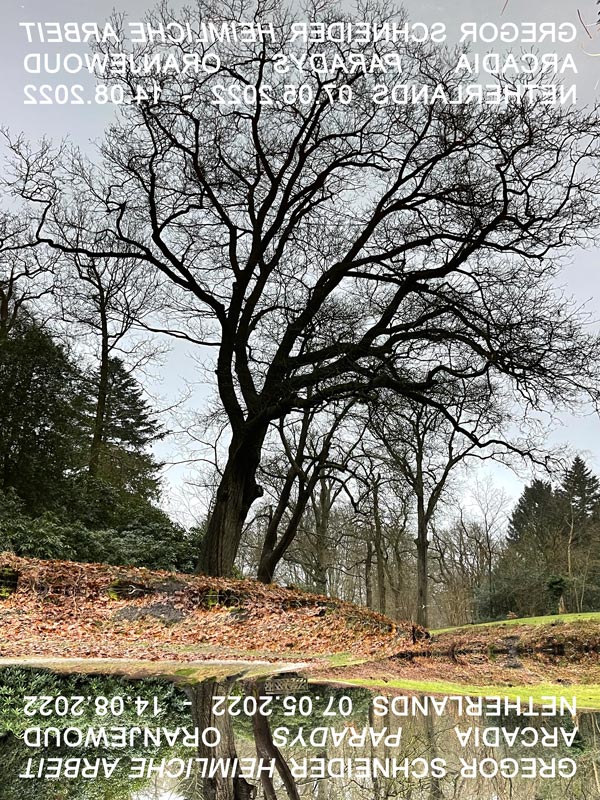
Paradys, Oranjewoud, Netherlands, Curator: Hans den Hartog Jager (Cat)
07.05.2022 - 14.08.2022
Macht! Licht!, Kunstmuseum Wolfsburg, Wolfsburg, Germany, Curator: Andreas Beitin and Holger Broeker (Cat)
12.03.2022 – 10.07.2022

Exhibited works:
Room:
HIGH SECURITY AND ISOLATION CELL No. 4,
Rheydt 2005, room within a room, blockboards on a wooden construction, 1 lamp, 1 stainless steel toilet, 1 door, 1 mattress, grey PVC floor, walls and ceiling high glossy white, detached (338 x 220 x 230 cm (L x W x H), S 11 - 25 cm))
Video:
WHITE TORTURE 2005 - today
HDV 19 min. 49 sec.
© Gregor Schneider
IN THE MEDIA
- Schneider, Anette, Wo Licht ist, ist auch Schatten, Deutschlandfunk Kultur, 12th March 2022, 5:31min.
- Wiechers, Janek, Kunstmuseum Wolfsburg beleuchtet die Ambivalenz des Lichts, NDR, 12th March 2022, 2:46min.
- n/a, Power! Light! (Germ. Macht! Licht!), e-flux (online), 16th March 2022
More info: https://www.kunstmuseum.de
Nation, Narration, Narcosis, Hamburger Bahnhof, Berlin, Germany, Curator: Anna-Catharina Gebbers
28.11.2021 - 03.07.2022
another world is possible, Glasshouse k.format, Kassel, Germany
18.06.2022 - 1.07.2022

Rhenish Lignite Mining Area (Rheinisches Braunkohlerevier) 2022
© Gregor Schneider / VG Bild-Kunst Bonn
Gemeinsam mit internationalen Künstler*innen eröffnen Fridays for Future und die Initiative 'Lützerath Lebt!' zum Auftakt der documenta fifteen am 18.06. die Ausstellung 'Another World Is Possible'. Im Glaspavillon des k.format Kollektivs in Kassel zeigen sie zwei Wochen lang Kunst mit Fokus auf das unmittelbar vom Tagebau bedrohte Dorf Lützerath - bevor dieses im Herbst den Abrissarbeiten des Kohlekonzerns RWEs ausgesetzt ist. Darüber hinaus veranstalten die Aktivist*innen im Juli vier Vorträge im ruruhaus
, dem zentralen Begegnungsort der documenta.
Auch der Künstler Gregor Schneider beteiligt sich mit seinen Arbeiten an der Ausstellung. Aufgewachsen am Rande des Braunkohletagebaus in Mönchengladbach-Rheydt, beschäftigt er sich bereits jahrzehntelang künstlerisch mit dem Rheinischen Braunkohlerevier.
Seine Ausflüge in die sterbenden Dörfern dokumentierte er fotografisch und filmisch. Er besuchte einquartierte Flüchtlinge in den sterbenden Dörfern, die nicht mehr auf aktuellen Straßenkarten verzeichnet waren. Er hielt die Umbettung von einem Friedhof fest, fotografierte Reste archäologischer Funde und hielt die Zerstörung der Natur fest. Es entstanden später Video-Kamerafahrten durch die unbewohnten „Geister-Dörfer“. Er begann Materialen aus einzelnen Häusern auszubauen um diese in sein sogenanntes Haus u r (1985-heute) einzubauen. Die ausgebauten Türen, Fenster und Böden wurden wieder zu ganzen Räumen. Schneider sagt: Ohne das Material aus den
.sterbenden Dörfern
hätte ich das sogenannte Haus u r vermutlich nie bauen können. An der Arbeitsweise Räume zu erhalten und zu recyceln halte ich bis heute fest
Dabei wurde das Haus u r für Gregor Schneider ein Ort des Rückzuges, dem privaten Entzuges, der Isolation und dem Verlust des Vertrautem.
1990 solidarisierte er sich künstlerisch
mit dem Ort Garzweiler. Er realisierte die Unbekannte Arbeit im verschwundenen Dorf Garzweiler
[https://www.gregor-schneider.de/places/1990garzweiler/pages/1990-91-garzweiler-01.htm]. Eine Arbeit die mit dem Dorf Garzweiler verschwunden ist.
In 2007 fand er ein Kinderzimmer in einem verlassenen Haus, welches ihn zu dem Raum KINDERZIMMER 2008
[https://www.gregor-schneider.de/places/2011madrid/pages/20111028-centro-de-arte-madrid-16.htm] inspirierte. Ein pink gestrichenes Zimmer mit einer pinken Matratze auf dem Boden. Später durchstößt Schneider diesen Raum mit einem übergroßen Wasserrohr. Schneider sagt: Solche großen Rohre liegen hier in der Nachbarschaft um das Grundwasser abzupumpen
.
Der temporäre Erweiterungsbau END 2008
[https://www.gregor-schneider.de/places/2008mgladbach/pages/20081108-museum-abteiberg-mgladbach-001.htm] (Städtisches Museum Abteiberg, Mönchengladbach) war für Schneider auch ein Kommentar zum verdrängten Braunkohleloch vor der Haustüre Mönchengladbachs. Gregor Schneider konfrontiert die Mönchengladbacher in der Innenstadt mit einen schwarzen Loch. In diesem schwarzen Abgrund stießen die Besucher auch auf ausgebaute Räume aus den sterbenden Dörfern.
2010 baute Gregor Schneider 10 Meter der Marienstrasse
[https://www.gregor-schneider.de/places/2010dueren/pages/20100627-hoesch-museum-dueren-03.htm] aus um diese Straße als letztes Überbleibsel einer verloren Ortschaft des Braunkohletagebaus bleibend zu erhalten.
Seid 2022 filmt Schneider Sonnenuntergänge (Sonniger Untergang
, Rheinisches Braunkohlerevier 2022 [Sonniger Untergang & Kunstlandschaft]) vor der despotischen Kulisse des Rheinischen Braunkohlereviers.
Die Aktionsgruppe zur Ausstellung ist eine Gruppierung aus Fridays for Future, Lützerath Lebt!, Studierenden der Kunstakademie Düsseldorf, Gregor Schneider, und weiteren internationalen Künstler*innen und Kollektiven, die sich zum Ziel gesetzt hat, die Kunst als Verbündete im Kampf gegen die Klimakrise zu gewinnen.
Mariesol Kleff für Fridays for Future
Kontakt
documenta@fridaysforfuture.de / documenta@fridaysforfuture.is
www.fridaysforfuture.de
+49 163 743 5791 (Telefonate, SMS, Signal, Telegram, Whatsapp)
—---------------------------------------------------------------------------------------------------------------------
Liste der ausstellenden Künstler*innen und Kollektive:
https://docs.google.com/document/d/18I8-5u4o5CGVQ9dFl6THr7C4wWZ-I_8nniDKU2jDkUNo/edit
More infos:
“Another World Is Possible” auf der Webseite des ruruHauses:
https://ruruhaus.de/another-world-is-possible/
@fridaysforfuture.de
@documentafifteen
@k.format
@ga_ea_collective
@lützilebt
@knstkdmdssldrf
A Century of the Artist’s Studio 1920 – 2020, Whitechapel Gallery, London, Great Britain, Curator: Iwona Blazwick, Dawn Ades, Inês Costa, Richard Dyer, Hammad Nasar, Candy Stobbs (Cat)
24.02.2022 – 5.06.2022

Exhibited works:
Video:
Haus u r, Rheydt 1985 – today
The one video includes the following chapters:
- Habe vergessen, worauf ich warte, 1995
- u r 1, u 14, Schlafen, 1988
- u r 10, Vorhang 1, 1993
- u r 19 A, Liebeslaube, 1995
- Nacht-video, 1996
VHS 29 min. 33 sec.
© Gregor Schneider
IN THE MEDIA
- Van Caesbroeck, Joke, N. Schmidt, Pferdegasse 18, 48143 Münster Gregor Schneider, 2017, De Standaard (online), 5th March 2022
- Kent, Sarah, A Century of the Artist's Studio, Whitechapel Gallery review - a voyeur's delight, The Arts Desk (online), 2nd March 2022
- Cumming, Laura, A Century of the Artist’s Studio: 1920-2020 review – congealing palettes, fading light and magic, The Guardian (online), 20th February 2022
More info: https://www.whitechapelgallery.org
Why can’t we live together, Kunstmuseum Marburg, Marburg, Germany, Curator: F. Peters-Messer
25.03.2022 - 19.05.2022
werden. From Michelangelo to →, Tiroler Landesmuseum Ferdinandeum, Innsbruck, Austria, Curator: Peter Assmann & Co. (Cat)
02.12.2021 - 18.04.2022
Exhibited works:
Sculpture:
KOLKATA GODDESS VI
Kolkata 2011, bamboo, straw, Hooghly River sludge, leftovers of fabric and paint
Video:
It's all Rheydt
HDV 31 min. 23 sec.
© Gregor Schneider
More info: https://www.tiroler-landesmuseen.at
Book presentation: GREGOR SCHNEIDER
8.04.2022 | 4:00 pm
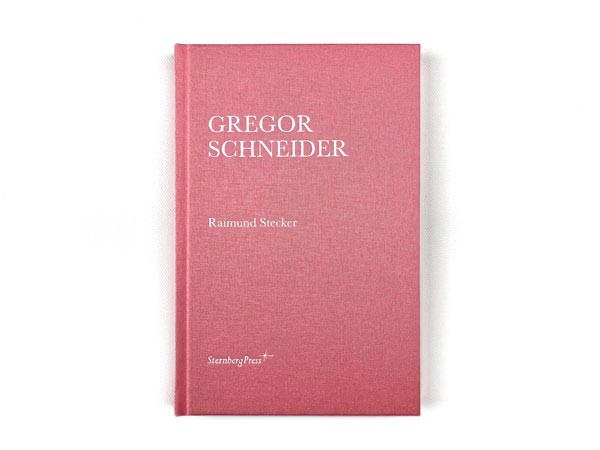
Christian Mosar, director of Konschthal Esch, invites to a book presentation of Gregor Schneider with Gregor Schneider and Raimund Stecker on April 8, 4 pm in Kunsthalle Düsseldorf.
Moderatorin: Sabine Maria Schmidt.
Pages: 112
Size: 205 x 135 mm.
Edited: Raimund Stecker, Esch 2021
Text: Raimund Stecker
ISBN: 978-3-95679-635-7
More info: https://www.sternberg-press.com
GREGOR SCHNEIDER EGO-TUNNEL, Konschthal Esch, Esch-sur-Alzette, Luxembourg, Curator: Christian Mosar (Solo) (Cat)
02.10.2021 - 09.01.2022


IN THE MEDIA
- Briegleb, Till, Expeditionen ins Möbelhaus, Süddeutsche Zeitung, 2nd January 2022
- Trinks, Stefan, Die Einsamkeit der Wachsfrüchte, Frankfurter Allgemeine Zeitung, 27th December 2021, Page 13
- Gabi Peters & Dirk Richerdt, Joseph Goebbels' Geburtshaus wiederentdeckt, Rheinische Post (online), 7th November 2014
- Boxler, Marcus,
Unausgesprochene Dinge treiben mich um
, Monopol (Magazine), 21st October 2021 - Siemes, Christof,
Ich habe es mir selber eingebrockt
, Die Zeit, 14th October 2021, Page 55 - Tornau, O., Kulturhauptstadt: Gregor Schneider in Esch-sur-Alzette, Arte, 6th October 2021, 2:04min.
- W. Kuhn, Thomas, Gregor Schneider Ego-Tunnel, Kunstforum No. 278 (Magazine), October 2021
NOTHINGTOSEENESS – LEERE/WEIß/STILLE, Akademie der Künste, Berlin, Germany
15.09.2021 - 12.12.2021
More info: https://www.adk.de
BLACK LIGHTNING, Triennale Brugge 2021, Brugge, Belgium
08.05.2021 - 24.10.2021

END
Mönchengladbach 2008, mixed media (14x14x66m (WxHxL)), Städtisches Museum Abteiberg, Mönchengladbach, Germany
© Gregor Schneider / VG Bild-Kunst Bonn
More info: www.triennalebrugge.be
More info: https://www.triennalebrugge.be
N. Schmidt, ART CITY Bologna 2021, Ex Gam, Bologna, Italy (Solo)
06.05.2021 - 16.05.2021

Photo: LIVING ROOM (with view of the kitchen)
life action, London 2004, room within a room, fiberboards on a wooden construction, 1 door, 1 window, 1 lamp, 1 radiator, 1 fireplace, 2 cupboards, 2 sofas, 2 tables, 1 TV, walls and ceiling wallpaper, carpet on the ground, detached (inside: 310 x 290 x 235 cm (L x W x H), S 1,2 - 10 cm), DIE FAMILIE SCHNEIDER, Walden Street No. 16, London, Great Britain
© Gregor Schneider / VG Bild-Kunst Bonn
More info: agenda.comune.bologna.it
Tote Räume / Dead Spaces, West Den Haag (former American Embassy), Den Haag, Netherlands, Curator: Marie-José Sondeijker, Text: Ory Dessau
29.08.2020 - 11.04.2021
Welcome, West is open to the public. Please note that due to current regulations related to the coronavirus, all visitors are required to reserve a time slot for their visit.
Please make your reservation here.

Tote Räume / Dead Spaces
West Den Haag (former American Embassy), Den Haag, Netherlands
© Gregor Schneider / VG Bild-Kunst Bonn
West Den Haag is thrilled to announce Tote Räume, Gregor Schneider‘s first solo exhibition in the Netherlands. Acknowledged as a groundbreaking artistic proposition, Schneider’s work can be regarded also as prophetic in a time of mandatory social distancing since it is based on mechanisms of physical isolation. Unfolding a sequence of rooms, sculptures, human figures, photos and videos spanning four decades of radical art making, the exhibition is arranged in response to, and exchange with, the original function of its building as the U.S. Embassy in the Netherlands from 1959 until 2018.
A clear example to this exchange is the ‘Interrogation Room’ – a pristine room replicating one of the prison cell modules in Guantánamo Bay Detention Camp, the U.S. detention facility located on Cuba’s southeastern coast. When incorporated into the setting of West Den Haag ‘Interrogation Room’ exceeds the boundaries of the aesthetic field and acquires the status of a real authoritarian space, outlining the exercise of power over the visitors and the potential violation of their bodily sovereignty.
Also included in the current sequence is ‘Cold Storage Cell’, which joins ‘Interrogation Room’ to politically contextualize Schneider’s continuous experiments in sensory deprivation and practices of stealth interrogation and clean torture, intermittently conducted throughout his entire oeuvre.
With the display of ‘Cryo-Tank Phoenix 3’ Schneider’s conception of sealed-off spaces extends beyond the political-jurisdictional framework provided by West Den Haag and obtains a metaphysical sense, turning every site in which it emerges into an intermediary zone situated between life and death, between this world and the world to come. A separate section in the exhibition is dedicated to ‘Geburtshaus Goebbels’, which involves the actual building in Mönchengladbach-Rheydt where Joseph Goebbels—the Reich Minister of Propaganda in Nazi Germany—was born. In ‘Geburtshaus Goebbels’ Schneider traces the roots of Nazi history almost literally, uncovering the physical foundations of Goebbels’ birthplace—the origins of his origins. Within Schneider’s universe ‘Geburtshaus Goebbels’ is also a follower of ‘Haus u r’, the artist’s own site of origin, standing a short distance away from it. ‘Haus u r’ is the name Schneider gave to the abandoned residential building, which he occupies since 1985, all the while ceaselessly reconstructing its inner structure as an idiosyncratic typology of visceral rooms built inside the house’s preexisting rooms (with windows in front of windows, walls in front of walls, etc.). Being realized through a process of self-consuming duplication—whereby each room is also the concealed room into which it was inserted, and the space—the difference—between them—makes ‘Haus u r’ an enduring experience of cognitive dissonance in relation to which presence and absence, construction and elimination, are no longer distinguishable from one another.
In the context of the exhibition a series of performances will be staged specifically for the occasion. Additionally to the project ‘Tote Räume’ West will organise an international symposium in November of this year. With the working title: ‘Gregor Schneider: Kunst im Kopf’.
Gregor Schneider (Germany, 1969) is cosidered one of the most influential artists of the last three decades. Since the end of the 1990s Schneider has been presenting solo exhibitions in leading museums around the world, including, among many others, Musée d'Art Moderne de Paris, Museun of Contemporary Art, Los Angeles, Kunstsammlung Nordrhein-Westfalen, Dusseldorf, Museo d’Arte Contemporena Roma. In 2001 Schneider won the Golden Lion award in the Venice Biennale of Art, and from then on his work is the subject of worldwide discussions and controversies. Schneider’s practice is an intersection between architecture, sculpture, and performance, intervening in the fabric of material, social and historical reality.
This project is supported by the Ministry of Education, Cultural Affairs and Science, the city of The Hague, Mondriaan Foundation and the Goethe-Institut.
More info: http://www.westdenhaag.nl/exhibitions/20_06_Gregor_Schneider
IN THE MEDIA
- Наталия Королева, Скандальные проекты Грегора Шнайдера, Deutsche Welle, 19th November 2020
- Raimund Stecker, Psychohäuser unseres Inneren, Frankfurter Allgemeine, 11th October 2020
- Maartje Wortel, Immer geradeaus de angst tegemoet — Gregor Schneider, Mister Motley, 9th October 2020
- Paul Kuipers, Van bezoeker tot gevangene: Breuer’s Amerikaanse ambassade revisited met Gregor Schneider, Archined, 8th October 2020
- Machteld Leij, Weinig, en toch zo ongemakkelijk. Gregor Schneider in West Den Haag, HART Magazine, 6th October 2020
- Lucette ter Borg, In het universum van Gregor Scheider bestaat geen onschuld, NRC Handelsblad, 1st October 2020
- Marie Civikov, Gregor Schneider / Tote Räume, Jegens & Tevens, 29th September 2020
- Mieke Rijnders, Gregor Schneider — Tote Räume, Witte Raaf, 21st September 2020
- Alan Quireyns, Waar is hier de uitgang?, Metropolis M, 21st September 2020
- George Vermij, De Schuldige Kamers van Gregor Schneider, Den Haag Centraal, 10th September 2020
- Carné van den Brink, Wat het daglicht niet verdragen kan, NPO Radio 1, 6th September 2020
- Eline van der Haak, Beklemmende kamers, Den Haag Centraal, 3rd September 2020
- Anna van Leeuwen, Claustrofilie, Volkskrant, 1st September 2020
- Paola van de Velde, Kamers bouwen in kamers, als kunst, Telegraaf, 1st September 2020
- Sandra Smallenburg, Happy accidents en andere exposities, NRC, 27th August 2020
- Hans den Hartog Jager, Gregor Schneider heeft een huis, en mondkapjes, NRC, 9th April 2020
Encounter: Gregor Schneider

Video link: https://player.vimeo.com/video/468175163
Encounter
Gregor Schneider & Ory Dessau
Lockdown with Gregor Schneider
I. Intro, office & Storage I

Video link: https://player.vimeo.com/video/418024325
II. Car ride & big storage

Video link: https://player.vimeo.com/video/418025376
III. Goebbels birth house

Video link: https://player.vimeo.com/video/418027290
IV. House u r + mini interview

Video link: https://player.vimeo.com/video/418029020
KREUZWEG (based on an idea for Berlin in 2006), St. Matthäus-Kirche, Berlin, Germany, Curator: Pastor Hannes Langbein (Solo)
19.02.2021 - 02.04.2021

KREUZWEG / WAY OF THE CROSS (based on an idea for Berlin in 2006), Logroño 2020
Foto: Josema Cutillas
© Gregor Schneider / VG Bild-Kunst Bonn / Goethe Institut Madrid
Kreuzweg (Way of the Cross) is a dark black passageway in the shape of a cross. The cross-shaped structure has four openings, one in each of its ends, through which the viewer can enter and exit. The shape of the cross is fully obtainable only from an aerial, God-like point of view. Upon entering the passageway, the viewer loses the formal contour of the structure, as the contour of his/her own body becomes blurred, melting into the indefinite blackness surrounding it, in which the distinction between one’s own outer/physical and inner/psychological space is no longer clear.
Obviously, Kreuzweg bears a direct reference to the Crucifixion of Jesus Christ. Rather than merely formal or iconographic, the reference to the Crucifixion is also experiential. Kreuzweg stages a theatrical rite of passage, a liminal scenography that strips viewing subjects walking through the passageway of their identities and everyday concepts of time and place, after which they are born again, reemerging into a world of a higher order juxtaposing terminality with resurrection.
Kreuzweg is the current culmination of the redemptive theological thread that runs through Schneider’s oeuvre. It is the explicit conclusion of many earlier works. One example of which is CUBE (2005-07). Schneider’s CUBE is a gigantic cubic outdoor structure covered in black cloth, seemingly replicating Islam’s holy edifice of the Kaaba. Formally, a flattened cube results in a cross. In this sense, Kreuzweg is the spatialization of CUBE after it was flattened. The geometrical link between the two works enables Schneider to incorporate CUBE’s scenario of circumambulating a black void into the immersive walked-through black void of Kreuzweg.
… In 2008 CUBE became END: a sixty-six-meter-long dark passageway which Schneider constructed outside Abteiberg Museum in Mönchengladbach. To enter the dark passageway, the viewer had to climb a small ladder and pass through a black square opening. At the end of the passageway, along which one’s own orientation and bodily integrity were being shaken, was a shaft leading the viewer to an underground dark space. The sole way out of the dark underground space was an elevator which carried the viewer to the museum’s illuminated collection galleries on the second floor, as if launching him or her from the domain of black death into the white territory of life after death.
Schneider’s interest in the hereafter can also be traced in his Cryo-Tank Phoenix (2006). A sealed cylindrical tank made of electro-polished stainless steel Cryo-Tank Phoenix was first presented on 02.11.06–the Christian Day of the Dead–at St Peter’s Church, Cologne. Its initial religious backdrop established a fundamental connection between the cryonic vision of preserving dead bodies in low temperature until wishful revivification, the story of Christ’s resurrection, and the anticipated event of his Second Coming. It marked the appearance of Cryo-Tank Phoenix in affinity to the apocalyptic-eschatological circumstances of the hereafter, turning every site in which it emerges into an intermediary zone situated between life and death, between this world and the world to come.
An excerpt from “Gregor Schneider and the Architecture of the Afterlife,” a text by Ory Dessau.
More info: https://www.stiftung-stmatthaeus.de
Time Present, Photography from the Deutsche Bank Collection, PalaisPopulaire, Berlin, Germany
10.06.2020 - 22.02.2021
STERBERAUM, Staatstheater Darmstadt, Darmstadt, Germany (Solo)
28.01.2021, 9:00 pm – 31.01.2021, 10:30 pm (LIVE STREAM)

Staatstheater Darmstadt, Darmstadt 2021
© Gregor Schneider / VG Bild-Kunst Bonn
NEWSPAPER
- n/a,
Installation
, dpa, 28th January 2021Sterberaum
: Live-Stream nonstop zur Pandemie - n/a,
Installation
, Welt (online), 28th January 2021Sterberaum
: Live-Stream nonstop zur Pandemie - n/a,
Sterberaum
im Live-Stream, Frankfurter Allgemeine Zeitung (online), 28th January 2021 - n/a, Gregor Schneiders
Sterberaum
im Live-Stream. Was es heißt, ein Mensch zu sein, Monopol (online), 28th January 2021 - n/a,
Gedenken an die Corona-Toten: Gregor Schneiders Sterberaum im Live-Stream
, Kunstforum (online), 28th January 2021 - Rieger, Birgit,
Sterberaum
als Live-Stream, Der Tagesspiegel (online), 29th January 2021 - Krämer-Alig, Annette, Trauer muss ihren Raum haben, Darmstädter Echo, 29th January 2021
- Kralapp, Carolin,
Auf einmal ist es still. Das Staatstheater Darmstadt zeigt Gregor Schneiders
, Gallerytalk.net (online), 30th January 2021Sterberaum
im Livestream - Hierholzer, Michael, Der maximale Abstand, Frankfurter Allgemein Zeitung, 30th January 2021, Page 50
- Strauss, Simon, Wie ein Säulenheiliger unserer Zeit, Frankfurter Allgemeine Zeitung (online), 30th January 2021
- Strauss, Simon,
Bleiben und Stille bewahren
, Frankfurter Allgemeine Zeitung, 30th January 2021, Page 12 - Sojitrawalla, Shirin, Ist da jemand?, Nachtkritik.de (online), 31st January 2021
- von Sternburg, Judith, Exerzitium, Frankfurter Rundschau (online), 31st January 2021
- Holze, Guido,
Lippen schweigen
, Frankfurter Allgemeine Zeitung, 1st February 2021 - Lorch, Catrin, Zum Sterben schön, Süddeutsche Zeitung (online), 2nd February 2021
- Goldmann, A. J., Theaters Go Digital to Talk About Life (and Death) in the Pandemic, The New York Times (online), 11th February 2021
RADIO
- n/a, Kunstprojekt
Sterberaum
im Livestream: Totengedenken im Staatstheater Darmstadt, SWR2 Kultur aktuell, SWR2, 28th January 2021 - Christophersen, Claudia, Konfrontiert mit dem Tod: Gregor Schneiders
Sterberaum
, NDR Kultur, NDR, 11th February 2021
TV
- Edinger, Kerstin,
Gregor Schneiders
, Kulturzeit, 3sat, 29th January 2021Sterberaum
More info: https://www.staatstheater-darmstadt.de/veranstaltungen/sterberaum.897